
Growth in Every Postcode: Lessons from the Historic Places Panel
What would ‘growth in every postcode’ look like if we started with the place itself? Drawing on lessons from Historic England’s Historic Places Panel, Ben Derbyshire reflects on what towns across the country tell us about delivering growth that is rooted in local identity, shaped with communities and supported by strong local leadership. His contribution offers a timely perspective on what a Place First approach to regeneration might mean in practice.
‘Growth in every postcode’ – Andy Burnham.
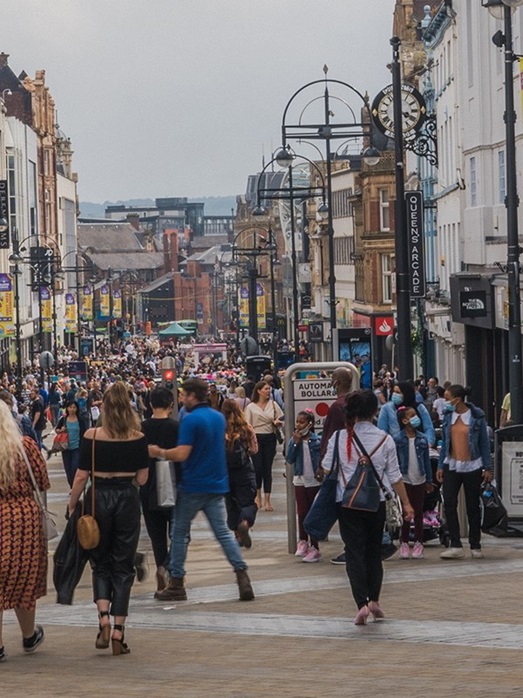
The Prime Minister has called for ‘growth in every postcode’ to ‘bring higher density residential development to our towns’. He has said he wants to ‘support all places to turn around those towns, their high streets and local centres, increasing footfall on the high street and protecting more green spaces from development’. He says, ‘rather than being a marker of decline, shouldn’t we make our high streets a new symbol of Britain’s renaissance?’ Based on his experience of Middleton & Stockport, Burnham wants to ‘bring higher density residential development to our towns’ and to replicate the model across Britain. The approach based on faster delivery, and cross-party cooperation.
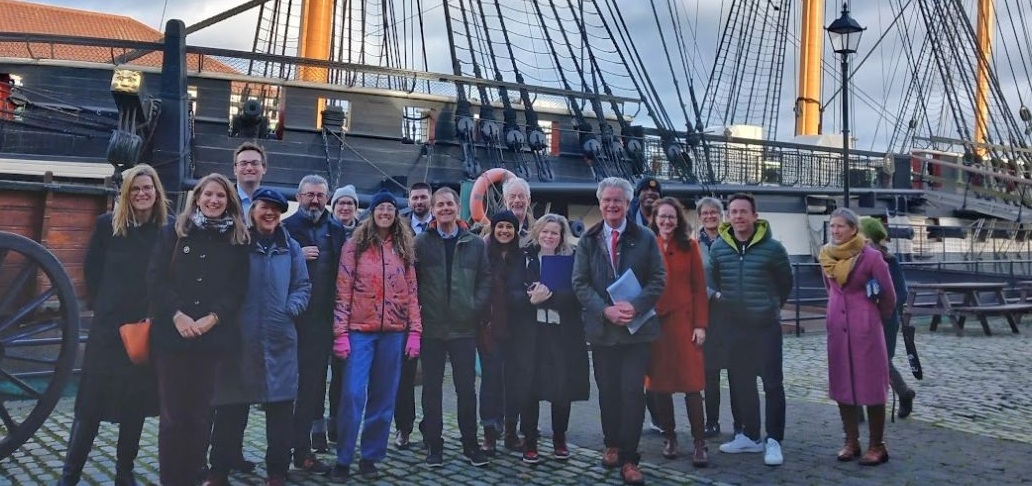
Coming to the end of my term as chair of Historic England’s Historic Places Panel, this seems an apposite moment to share the panel’s expert view, formed on the basis of two-day workshops with the leaders of many just such towns as they try to meet exactly the challenge Burnham has set for the nation.
The Historic Places Panel is an expert advisory group facilitated by Historic England that provides independent, professional advice to local authorities on the regeneration and revitalisation of historic towns and cities. The panel is made up of specialists in town planning, architecture, landscape design, transport, public engagement, archaeology, master planning, development economics, and cultural development deployed according to the particular circumstances of each visit. Our reports are posted on the Historic England website.
During my term we have been invited to advise Accrington, Dewsbury, Luton, Portsmouth, Hartlepool, Exeter, Barrow in Furness, Stoke on Trent, Bedford, the Medway towns, Southport and Scarborough – places with a range of characteristics relevant to the government’s challenge. With an average population of around 100,000, some in the north of England suffer from classic industrial decline, the resort towns are experiencing changing patterns of tourism, in some cases the question is how major local investment such as for defence or the entertainment industry can benefit the town as a whole.
But common to all is the decline of activity in town centres, high turnover and vacancy of retail, commercial and residential premises, collapse in the quality of street-life, and dwindling footfall. As often as not, distinguished and often listed town halls stand in conservation areas deemed ‘at risk’ by Historic England. Many other fine scheduled buildings lie vacant – evidence, if any where needed, that empty space is by far the biggest threat to our heritage. The impact on civic pride and social cohesion is at the very heart of what Burnham seeks to tackle.
There are common themes that run through the recommendations we’ve made to the places the panel has visited.
People centred regeneration.
- Strengthening Community Participation – regeneration should be done with communities rather than to them.
- Supporting Local People and Inclusive Growth – regeneration success should be measured by outcomes for residents, not just physical change.
- Developing a Stronger Place Identity – successful regeneration starts with understanding what is unique about the place.
- Focus on Quality of Place – quality of environment is fundamental to economic and social success.
Lessons for planning and delivery.
- Building Partnerships and Local Capacity – this reflects the Panel’s belief that governance is often as important as funding.
- Creating Long-Term Strategic Frameworks – successful regeneration requires coordinated, long-term planning.
- Improving Connectivity and Movement – regeneration should be planned at the scale of the whole place, not isolated sites.
- Heritage as an Economic Asset – heritage should be embedded within economic development strategies.
- Diversify Town Centre Uses – town centres need to evolve from shopping destinations into multi-purpose places.
What do these headline principles distilled from our Historic Places Panel reports mean for the reality of Andy Burnham’s ambitions?
Firstly, the ability to do the job properly will rely on how successfully resources and control are devolved. Local authorities in these small towns are incredibly depleted in ways which make the necessarily long term, holistic, interdepartmental, and cross-sectoral approach difficult or impossible. Town councils have relied on time constrained capital grants resulting in a piecemeal approach.
At the heart of a successful people-centred approach to regeneration and economic growth must be sustainable structures to connect with the local population and community groups from across the full spectrum from arts and culture, through sport, religious activity, community health and so on. We have frequently recommended setting up an Urban Room, as envisaged by the Farrell Review, as neutral ground with resources to channel discourse positively.
With appropriate and representative governance, such as a town board with membership from local public institutions and commerce, as well as community, the idea is to muster contributions that can both help envision a plan for the future and harness under-utilized energy to activate space both within and in-between buildings. Local people have unique knowledge to contribute to the analysis of existing and potential use of space.
Local authorities must learn to foster and support a diverse, bottom-up process – avoiding the temptation to overrule propositions and processes that can be fragile in their formative stages by taking advantage of political control of resources. Instead, there is so much that can and should be done using statutory powers to make appropriate space available through planning, compulsory purchase or enforcement in support of grass roots activity.
Thus the densification of which Andy Burnham speaks can happen just as much with the re-occupation of vacant space as with the development of new buildings. Historic England has estimated that up to 670,000 new homes can be created from vacant historic buildings alone. This includes the huge potential space such as flats over shops or adaptive re-use of commercial and retail space.
Often, we have suggested processes such as these to re-structure the existing urban fabric and re-wire the connectivity that enables re-activation of abandoned town centres. Indeed, a sustainable, low carbon and biophilic transformation of town centres is possible by fitting these changes into the armature of a wider canvass so that town centres can become a much more attractive draw for human occupation and enjoyment.
Such radical changes, in the interests of a low carbon future, can evolve over the medium term with the detuning of the mid-century road systems that isolate many of our town centres from their residential hinterland, the removal of street level and multi-storey parking, and new green and blue, wheeled and walking networks as well as bus links to park and ride sites. Land given over to tarmac can be repurposed to provide homes and better quality public spaces.
All of these possibilities have been made in recommendations made across the country in our published reports. Equally, we have generally made it clear that an underlying principle of people and heritage-centred regeneration is that the vision for change should be underpinned by a commitment to the future role and reputation of renewed town centres which should clearly owe its origins to grass roots activity and remain supported and simply articulated by community as a vison for what a town’s brand should present to the world.
Andy Burnham’s plea for expertise to bring growth to every post code in the country will require the involvement of a wide range of competence – much wider than development skills alone. If we want our revitalised town centres to burgeon with locally grown activity and enjoy the enthusiastic support of local groups, I’d suggest that the interdisciplinary model of the Historic Places Panel provides a useful model.
Benjamin Derbyshire Dip Arch Cantab, DUniv (hon), PPRIBA, FRSA, Hon AIA.
Chair, HTA Design LLP
Commissioner, Historic England
President, London Forum of Amenity & Civic Societies
Trustee, SAVE Britain’s Heritage