
IPM Fellow Diane Cunningham on why the High Street Strategy must include the Night-Time Economy
Author: Diane Cunningham, The Assembly Line, Fellow IPM
What should be included in a new night time economy strategy?
Many high street renewal projects now include an element of night time activity, whether it’s looking at how existing activities can be extended later, how businesses can be supported to open in the evening and/or facilities available for those working at night.
But what should be included in a new night time economy strategy to support and harness its value?
It’s an extremely challenging market for night time venues with some forced to close for part of the week to save costs. But evening and night time activities are important for towns and city centres.
They prevent the hard stop where the retail businesses and services often close around 5pm, and places empty out. In some places the hard stop can be even earlier, with the school pickup time being the marker.
Where activities and businesses are closely matched to what people want from their evening, they provide new reasons to visit, create employment and can improve town and city centre safety as there are more people around.
A 2019 pilot project supporting night time activities and extended opening hours in Walthamstow, East London, saw footfall increase by 22%, more families and young people attracted to the area, and improved perceptions of safety.
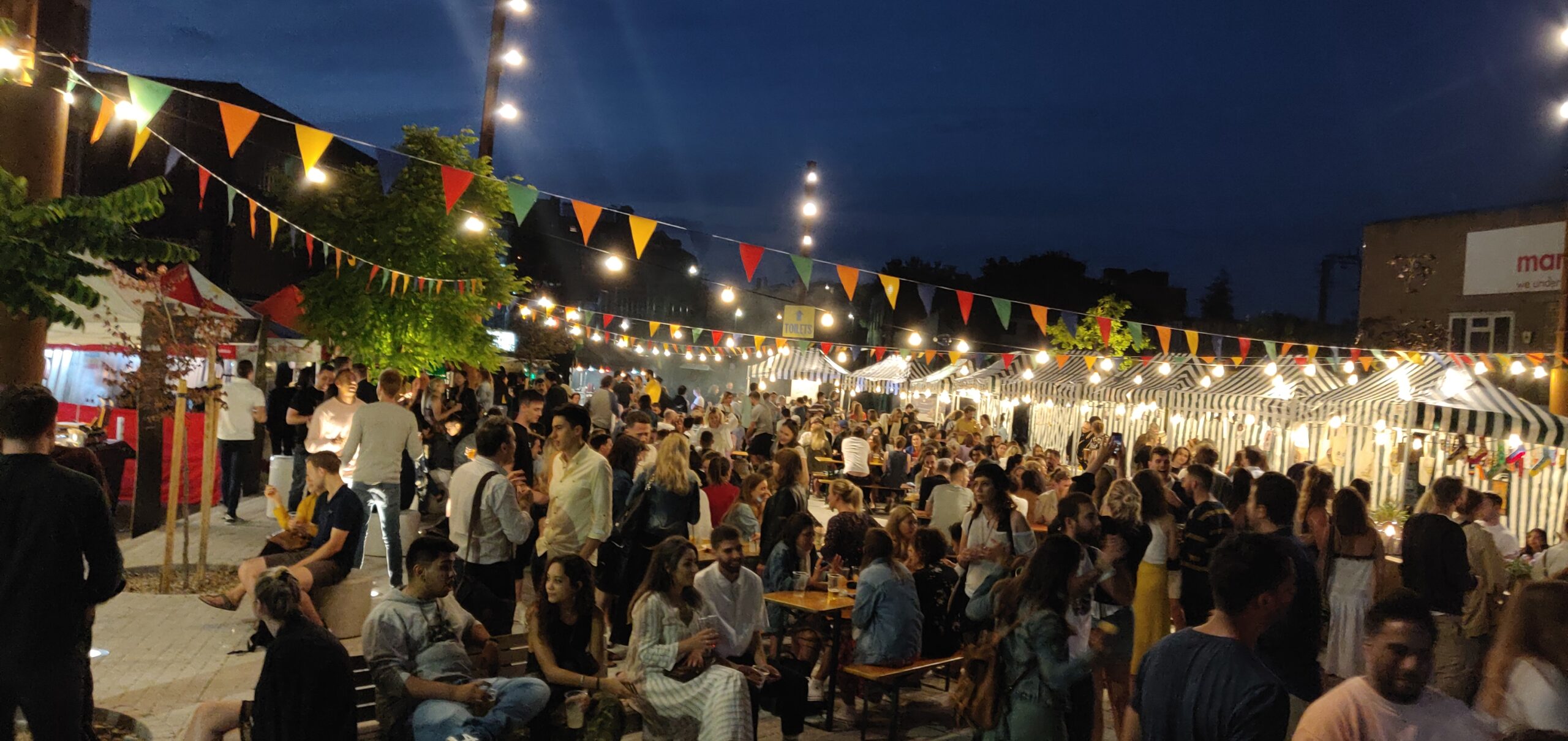
It led to more night time enterprise zones being set up, but crucially, it also demonstrated that evening activities don’t have to centre on alcohol. There is a traditional/outdated view that night/evening means pubs, clubs and late nights.
In the same way, a night time economy strategy can’t simply focus on bars, pubs and clubs. It should encompass all the reasons people are out at night such as work, health and fitness (gyms etc) and education.
Neither can it ignore all the community-based activities in places like religious buildings, community halls, libraries and pub back rooms, such as youth clubs, choirs, societies and social clubs. (Chess clubs and board game nights seem to be popular.)
A strategy needs to start with mapping what is already there. The number of activities may surprise, but all can form an important part of the footfall generated in the evening and be attractors to people who may not think there is anything on that appeals to them.
What daytime activities can be extended into the evening or run later? Meanwhile (temporary uses), can be used to create spaces for testing demand for new activities.
Headlines suggest that Gen Z/younger people are turning their backs on alcohol-centric evening activities. But they still want to go out, and affordability is the primary issue.
Value for money is key, and activity, not just sitting in a pub, is important. This means venues need to offer more than just a drink or something to eat.
Young people are also an important part of the night time economy workforce, particularly in places with large student populations.
The most recent NTIA Market Monitor (2026) estimates that the night time economy supports two million jobs.
Better support for those working in the evening and at night would help unlock opportunities to create more jobs.
It’s important to recognise the importance of the night time sector in offering entry-level jobs (and career progression) to young people, building their confidence and providing them with skills which can equip them for the future.
But the nighttime economy can’t operate in isolation and needs to be seen as part of an overall ecosystem that links venues, food and beverage, transport, planning and regulation. All need to work together.
For example, for those visiting and employed in night time venues, transport is important. Places need to be easy and cost-effective to get to and home from.
Transport also needs to be reliable and feel safe at night, which is particularly important for women.
There is already some political support for the night time economy. Labour MP Angela Rayner recently called on the government to appoint a dedicated Minister for Night Time to champion the sector. She has called for alignment with taxation and policy to reflect its importance.
In London, the Nightlife Taskforce’s report sets out a comprehensive plan to drive the future of the capital at night.
New licensing plans have been announced by London Mayor Sadiq Khan, which are designed to test a city-wide strategic licensing policy.
In many areas, we are reminded that people/businesses don’t see borders. By testing a city/region approach, it is hoped that it will end the inconsistencies in the granting and regulation of licenses across boroughs.
Could something similar be rolled out to the combined authorities outside London, giving them more control over licensing?
Focus from politicians is undoubtedly a positive for the night time economy, but a holistic approach is required to create thriving places.
Any strategy needs to include planning, regulation and transport as well as licensing to create an environment where those businesses operating at night have a better chance of success.