
Martyn’s Law and Markets: Balancing Protective Security Across Indoor and Outdoor Spaces by Aimee-Louise Eriksen

Aimee will be attending the IPM Place Symposium on June 10 and is happy to be connected with anyone attending to discuss Martyn’s Law.
As the Security Industry Authority (SIA) consults on its draft Section 12 guidance, which sets out how it proposes to exercise its functions as the regulator for Martyn’s Law, there is a valuable opportunity for the market sector to help shape the practical implementation of the legislation. Markets occupy a unique position within the places we manage. They range from enclosed market halls and managed trading environments to large outdoor markets operating within open public spaces. Ensuring that regulatory guidance reflects this diversity will be important if Martyn’s Law is to achieve its objectives in a proportionate and effective way.
Those involved in managing markets, town centres, public spaces and events may wish to review the draft guidance and consider whether it adequately reflects the realities of operating open-access environments where responsibilities are often shared across multiple organisations and partners.
The consultation closes at 11:59pm on 12 June 2026, meaning there is now only a short period remaining for practitioners to contribute their experience and help inform the regulatory framework that will underpin Martyn’s Law.
Martyn’s Law and Markets: Balancing Protective Security Across Indoor and Outdoor Spaces
by IPM Member Aimee-Louise Eriksen, Crowd Consulting
Markets have always been places of exchange, community and civic life. They are open, accessible and woven into the fabric of towns and cities. Qualities that make them socially valuable, but also operationally complex from a safety and security perspective. As Martyn’s Law moves closer to implementation, the market sector faces important questions around how protective security can be applied proportionately across these very different environments.
While much of the national conversation has focused on stadiums, arenas and large entertainment venues, markets present a far more varied operational picture.
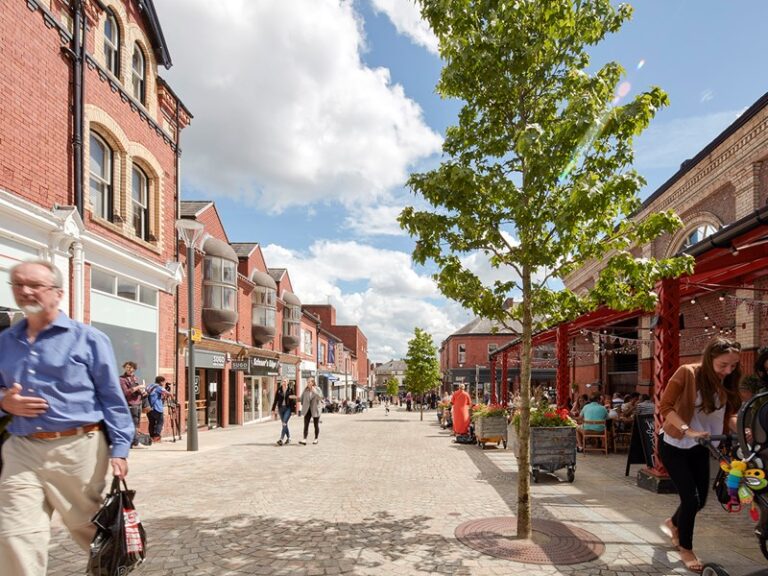
Indoor markets may share some characteristics with more traditional premises-based environments, including defined access points, fixed infrastructure and relatively consistent occupancy patterns. Outdoor markets, however, often sit within wider town and city centres, operating across open public spaces where movement, access and crowd flow are naturally less controllable.
For many market operators, the challenge is therefore not whether security matters but how practical and proportionate measures can be introduced without losing the accessibility, vibrancy and character that make markets work in the first place.
This becomes particularly important given that markets are rarely standalone environments. Their day-to-day operation is closely linked to transport networks, high streets, public realm activity, neighbouring businesses and local events. Responsibility is often shared between local authorities, market teams, event organisers, private operators and emergency services.
As a result, Martyn’s Law also raises wider questions around place management, partnership working and operational coordination across public spaces.
An interesting operational distinction also emerges when considering large outdoor markets and seasonal events. A busy Christmas market, for example, may attract significant daily footfall, high crowd densities and complex movement patterns across open public space. Yet where the market remains un-ticketed and fully integrated into the wider public realm, it may fall outside the scope of Martyn’s Law where they do not meet the thresholds for qualifying premises or qualifying events. However, best practice would be to review risk assessments and operational activity in the spirit of the law.
That creates some interesting discussions around how risk, responsibility and proportionality are interpreted within open-access environments. In practice, many outdoor markets may face crowd management and protective security challenges very similar to those experienced by venues and events that do fall within scope.
Importantly, implementation must remain proportionate. Markets vary enormously in scale, complexity and resource capability, from historic market halls and major city-centre operations through to smaller community and local authority-managed spaces.
The success of Martyn’s Law within the market sector will likely depend on guidance and approaches that are practical, flexible and grounded in the realities of operating everyday public places, rather than relying solely on models developed for enclosed or ticketed venues.
Markets have continually evolved in response to changing economic, social and operational pressures. Martyn’s Law represents another stage in that evolution and an opportunity to strengthen resilience, preparedness and partnership working across both indoor and outdoor market environments.
A final point is that successful implementation will rely heavily on the approach taken by the SIA as regulator. Markets operate in highly diverse environments and operators will need practical, proportionate and accessible guidance to help translate legislative requirements into effective operational day-to-day measures. A supportive regulatory approach that prioritises engagement and understanding alongside compliance is likely to deliver the strongest outcomes.