
Restoring the high street means restoring purpose and connection

Professor Nigel Morgan reflects on the Restoring the High Street Conference, September 2026 and the lessons it offered for place managers and leaders.
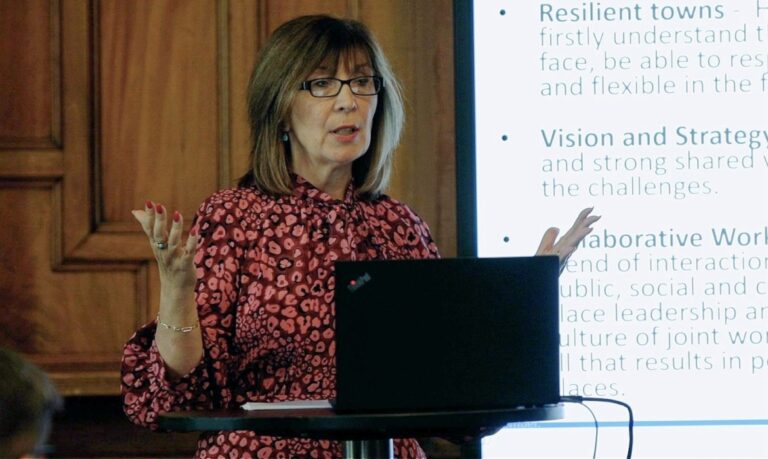
On 22 September, I had the pleasure of chairing the Restoring the High Street Conference 2026. Across contributions from policymakers, practitioners, businesses and community organisations, one message became increasingly clear: restoring the high street is not simply a retail challenge. It is a place challenge.
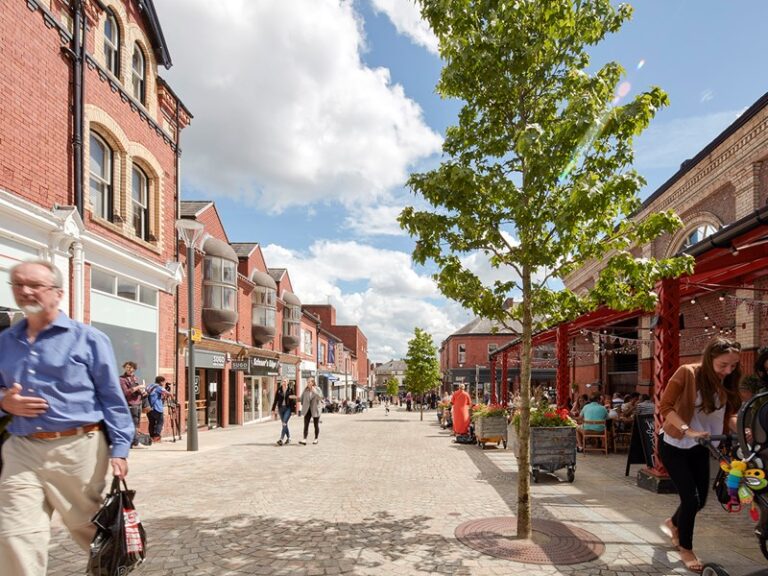
High streets have always been more than collections of shops. They are places where people meet, work, socialise and access essential services. They help to give towns and neighbourhoods their identity and provide the everyday encounters through which a community becomes more than a collection of individuals.
The question is therefore not simply how we persuade people to shop on the high street again. It is: what do our communities now need their high streets to be?
Stewardship and local capacity
The importance of stewardship ran throughout the conference. Successful places are not transformed by a single intervention or funding announcement. They require people and organisations willing to assume long-term responsibility, nurture relationships and maintain momentum.
Catriona Maclay’s contribution on community-led regeneration highlighted the importance of civic systems, local stewardship and community participation. Communities possess expertise, not merely opinions to be gathered through consultation. They need to be involved in identifying priorities, shaping solutions and, where possible, delivering and sustaining change.
Graham Galpin also raised a fundamental concern for the place-management profession: the lack of capacity and competency needed to translate ambition into delivery. Too often, there remains a disconnect between strategic policy and the intensely local realities of individual high streets.
Ambitious strategies will achieve little without skilled people who understand how places work and can bring businesses, communities, property owners and public bodies together. Place management cannot be treated as an incidental responsibility added to somebody’s existing role. It is a demanding and increasingly complex profession in which we must invest.
High streets as social and cultural infrastructure
Gemma Thomas’s case study of health on the high street demonstrated how locating services in familiar and accessible town-centre settings can bring support closer to the people who need it. It also reminded us that high streets can play an important role in addressing loneliness and social isolation.
This challenges us to think beyond conventional measures of performance. Footfall, occupancy and commercial returns matter, but so do accessibility, wellbeing, belonging and human connection. Quantitative measures need to be complemented by the individual stories that show how a service or intervention has affected people’s lives.
Mike Kill’s examination of the night-time economy reinforced the need for cultural, social and creative infrastructure. Patterns of town-centre use have changed, and successful high streets need affordable, versatile spaces capable of accommodating live music, performance, markets, exhibitions, community activity and new forms of hospitality.
Without affordable space, we risk excluding precisely the independent and grassroots activity capable of renewing a place. Partnerships and good communication are essential, but so is measuring the right things. A successful evening economy should be judged not only by revenue or visitor numbers, but by its diversity, accessibility and contribution to the life of the place.
Opportunity from vacancy
The conference also demonstrated how vacant premises can become opportunities for experimentation, enterprise and community use.
Alex Schalgman’s discussion included examples from Southend-on-Sea and again underlined the importance of partnership in turning vacancy into opportunity. Emily Berwyn showed how community use can unlock void and vacant properties, giving new enterprises and community activities the chance to establish themselves. This should not simply disguise vacancy. At its best, it tests new ideas, widens access to space and creates pathways towards more enduring activity and local stewardship.
Joe Barratt’s presentation on teenage markets offered an especially encouraging example. Joe spoke of how young people should not be regarded merely as future users of the high street. They are already creators, entrepreneurs and members of their communities. Teenage markets provide young people with opportunities to test ideas, develop confidence and acquire practical entrepreneurial skills. The individual stories behind them demonstrate what becomes possible when young people are given space, encouragement and a visible role in town-centre life.
Safety through enforcement prevention and partnership
The final panel brought together Hannah Wadey of Safer Business Network, Lucy Whing of the British Retail Consortium and Josh Nicholson of the Centre for Social Justice to consider community safety and high-street innovation.
Hannah warned that retail crime is becoming increasingly organised and complex. It can involve organised criminal networks, human trafficking and the exploitation of vulnerable people who are coerced into shoplifting. This is far removed from the traditional image of isolated, opportunistic theft and requires a more coordinated response across organisational and geographical boundaries.
Hannah also emphasised the need to share research, information and intelligence more effectively. Police and enforcement agencies hold important data, but businesses, business crime-reduction partnerships and community organisations also possess valuable local knowledge. Effective partnership requires public agencies to trust other organisations sufficiently to share relevant intelligence lawfully, proportionately and securely.
Lucy highlighted the direct impact of anti-social behaviour on retail workers. Theft, intimidation and abuse affect people working on the high street every day, damaging morale and wellbeing as well as business confidence. Retail workers should therefore be central to discussions about community safety, rather than treated simply as part of the commercial backdrop.
Josh underlined the continuing importance of enforcement. Addressing the social and economic causes of crime and anti-social behaviour does not remove the need for visible, credible and consistent action. Businesses, workers and communities need confidence that harmful behaviour will be addressed. He also argued that the scale and organisation of contemporary crime may require more radical national solutions. These could include a national policing capability focused on the issue, greater use of facial-recognition technology with appropriate legal and ethical safeguards, and the creation of a national trading standards enforcement agency with local teams.
These proposals will inevitably generate welcome debate and they reinforce an important point: high-street crime does not respect local authority or police-force boundaries. Local partnerships remain essential, but they need to be supported by national coordination, intelligence and enforcement capacity.
Partnership working requires more than organisations meeting periodically. Councils, businesses, police, enforcement agencies and community organisations need shared objectives, clear responsibilities and better channels for exchanging information. Improved reporting systems, shared intelligence and strong business networks can make a tangible difference, provided that innovation becomes part of sustained practice rather than remaining a short-lived pilot.
The panel also raised a broader place-management question: how can we create high streets that feel safer because they are active, inclusive and welcoming, rather than simply more heavily controlled or monitored?
Public-realm design, accessible social spaces, community activity and a diverse mix of businesses and uses all contribute to safety. A high street occupied by people at different times and for different purposes develops natural activity and social connection. Safety should therefore be considered an integral part of regeneration, not an additional feature addressed after the main decisions have been made.
A place challenge
There is no universal template for the successful high street. What works in a large city centre may not work in a coastal town, market town or neighbourhood centre. Regeneration must begin with the place itself: its people, history, assets and ambitions.
The task is not to recreate the high street of twenty or thirty years ago. It is to restore purpose, confidence, connection and possibility.
That requires commercial vitality, social infrastructure, cultural expression, community safety and local identity to be considered together. Above all, it requires stewardship, meaningful partnerships and sufficient professional capacity to turn short-term initiatives into lasting change.
Our challenge is to manage the transition towards high streets that are more diverse, inclusive, enterprising and resilient, while ensuring that they remain recognisably rooted in the communities they serve.
Professor Nigel Morgan is Professor of Social Sustainability at Manchester Metropolitan University and chaired the Restoring the High Street Conference 2026.