
Tourism Tax – Fix the bucket first and Hypothecate!
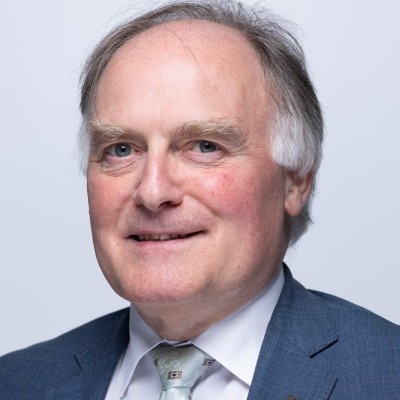
Adrian Barsby is a tourism and hospitality specialist with extensive experience advising businesses across the visitor economy, from independent accommodation providers and attractions to hotel groups and leisure destinations. Through Barsby Associates, Adrian has worked with more than 300 enterprises, bringing a strong commercial and practical perspective to the challenges and opportunities facing the sector.
In this blog, Adrian considers the growing debate around visitor levies from the perspective of tourism and accommodation businesses. He argues that the sector is not necessarily opposed to a levy in principle, but that any new approach must address the existing pressures on businesses, avoid duplication and ensure that revenue raised is reinvested in the places and visitor economies that generate it.
Adrian will be speaking at A Place First Approach to Tourism, January 21st 2027.
Tourism Tax – Fix the bucket first and Hypothecate!
The visitor economy and especially accommodation providers are happy paying their taxes, indeed this sector has innovated over decades of increasing taxes, surcharges, commissions and regulations to be the anchor of most successful and vibrant destinations. A broad apportionment below highlights just how much is being extracted in taxes from our hard-earned income and disappearing from our destinations;
| Sector | Approximate Total Burden |
| Hotels | 33-56% |
| B&Bs / Guest Houses | 8-44% |
| Self-Catering Holiday Lets | 12-48% |
| Serviced Accommodation | 29-52% |
| Holiday Parks | 23-53% |
Sources Gov.uk Bird&Bird, littlehotelier.com
For a policy or economic-impact analysis, a reasonable central estimate is that government imposed taxes, rates, duties and levies alone account for roughly 22-30% of gross revenue for a typical VAT-registered hotel, before considering booking commissions and other third-party charges.
Let’s not forget wages at circa 30-40%, F&B cost of sales at circa 25-35% before utilities, repairs and renewals, IT upgrades etc… and oh, booking commissions at between 15-25%.
Our hard-earned income is already oversubscribed resulting in delayed capital investment, reduced recruitment and much reduced “headspace” for collaboration and strategic planning as firefighting and keeping our heads above water and day to day survival becomes by necessity, our focus.
Despite this bleak picture our sector is not ideologically against hypothecated levy’s especially if these are designed to ensure the whole visitor economy make fair contributions and that the sector has clear oversight how the tax receipts are used. Indeed, accommodation providers have a tradition of leading on, joint marketing, sharing insights and best practice, developing strategic plans and contributing to international, national, regional and local forums and fora. Successful schemes such as Manchester ABID led by hoteliers is often rolled out as an exemplar. Building on established city partnerships the Manchester ABID model is indeed an exemplar for cities and destinations with a high density of providers. The model needs considerable adaptation to be fit for purpose in rural and less defined destinations. Other countries who have tourism taxes that are frequently cited as exemplars pay significantly less central Government taxes and have established partnerships, mechanisms to engage with and unify the visitor economy to support broader national and regional priorities around, identity, sustainability, sense of place and regeneration.
Currently the best model in the UK is (if fully funded) as recommended by De Bois, a tiered model that reduces duplication and ensures complimentary activities supporting national, regional and local objectives. Clear funding streams linked to explicit KPIs.
Our (accommodation providers) very existence depends on our ability to respond to macro and micro impacts, managing these forces to ensure we stay legally viable so as to avoid bankruptcy and the cessation of trading. These pressures enforce us to take hard decisions as outlined previously starting with what expenditure must we stop so we can balance the books and after paying current level of taxes, levies and regulative fees, keep employing colleagues, pay our partner suppliers and add to the mosaic that creates a viable, sustainable and hopefully regenerative destination. We will look for the hole in our bucket and fix it or go out of business!
Before Mayors and other bodies start dreaming up ways to tax us further, I respectfully insist that you demonstrate measures you are undertaking to fix your bucket(s), reducing/eliminating waste and duplication before extracting more value from the accommodation sector – pouring more of our hard earned income that we have attracted into a leaking bucket will only serve to weaken a cornerstone of destinations, decimating places and impoverishing those of us who live in and depend on thriving, regenerative communities.
It does not make sense that a tax levied against overnight visitors will ever generate sufficient revenue streams to address the wider infrastructure required for vibrant and regenerative communities I implore that everyone, whether for or against tourism taxes understand the simple basics of supply, demand and journey, best learned through the lens of Leiper and Gunn, these models bring us back to the truths,
- Demand = ability and propensity to, i) pay, ii) travel, iii) have time
- Journey = travel infrastructure i) distance, ii) options, iii) security
- Supply = pull factors i) accommodation, ii) culture & history etc iii) sense of place
The visitor economy naturally provides a symbiotic environment for Public, 3rd and Private sectors to act together for mutuality and especially for the whole community within destinations. Over the past 30+ years the private sector has innovated, invested and helped to create a world class destination where the UK often sits in the top 10 in order of attractiveness internationally (Anholt Nation Branding & WEF TTDI 2024), until recently although often at the low end of affordability due to high costs our overall offering has been seen as expensive but value for money. My fear is that having unlimited tax raising powers will tip the balance and discourage international visitors and reduce the frequency of UK citizens to take short breaks etc. Taking us back to the 1970s and early 1980s when weekend occupancy was limited to weddings and functions. Just think of the impact on holiday lets, festivals, theatres and our highstreets if we price this “luxury” activity out of the reach of the general public. For the economists reading this I strongly suggest you consider that the visitor economy and especially the accommodation sector has reached the point of the down curve of the Laffer Curve, where tax levels create a decline in tax receipts. The World Travel and Tourism Council, February 2026 warn; “The World Travel & Tourism Council (WTTC), which represents the private sector in the travel & tourism industry, has cautioned against the introduction of new local visitor levies in England, warning that additional costs and fragmented local policies risk fewer jobs, as well as further weakening the UK’s competitiveness at a time when the sector’s growth is already lagging behind global recovery”.
To be blunt we need less Government interference in our sector. If they deem there is sufficient slack in their schedules, we would appreciate that they either reduce the headcount and tax burden and or get to grips with extractive consequences of OTA and Food Delivery commissions. If these were halved for our businesses, we would have the headroom to contribute towards Hypothecated Taxes and the delivery of strategic inward investment.